Gate Valve
- Home
- / Products
- / Valves
- / Gate Valve
Navjivan Valve
Gate Valves
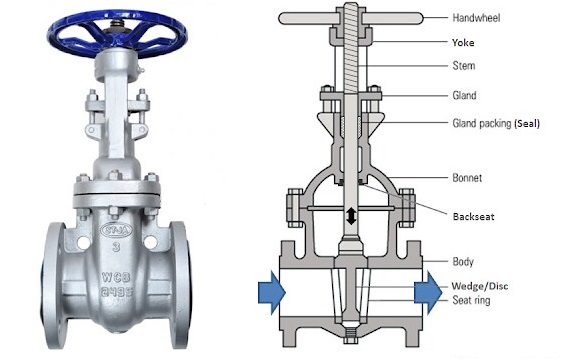
Gate valves are a type of valve commonly used to control the flow of fluids in a piping system. Gate valves are named for the gate-shaped wedge that moves perpendicular to the flow of the fluid to control the flow. When the valve is fully open, the gate is lifted completely out of the fluid path, minimizing flow restriction.
Gate valves operate by raising or lowering a gate (usually made of metal) to either allow or stop the flow of fluid. The gate is moved by a threaded stem that is turned by a handwheel or actuator. Gate valves are typically either fully open or fully closed, offering minimal restriction to flow when open.
There are four main types of gate valves :
- Forged Steel Gate Valves
- Bellow Sealed Gate Valve
- Pressure Seal Gate Valves
- Knife Gate Valves
Applications:
Gate valves are commonly used in applications where a straight-line flow of fluid with minimum restriction is desired, such as in water supply systems, oil and gas pipelines, wastewater treatment plants, and industrial processes. They are suitable for both on/off and throttling (partially open) applications.
Maintenance:
Regular maintenance is essential to ensure the proper functioning of gate valves. This may include lubrication of the stem, inspection of the gate and seat for wear or damage, and cleaning of the valve internals.
Specifications
| Design Standards : |
BS 1414, API 600, ASME B16.34 |
|---|---|
| Testing Standards : |
BS 5146, API 598 |
| Size Ranges : |
½”-36″ (DN15-DN900) |
| Class : | 150-2500 |
| Material of Construction: | WCB, WCC, WC6, WC9, C5, C12, LCB,LCC, CF8, CF8M, etc. |
| Seat: | A105+13%Cr, A105+Steelited. |
| Trim: | API No 1 to 16. |
| Face to Face: | As per ASME B16.10 |
| Actuation: | Manual, Gear, etc. |
| End Connection: | ANSI B16.5(Raised Flanged), ANSI B16.25(Butt Weld) |
Navjivan's GATE Valve
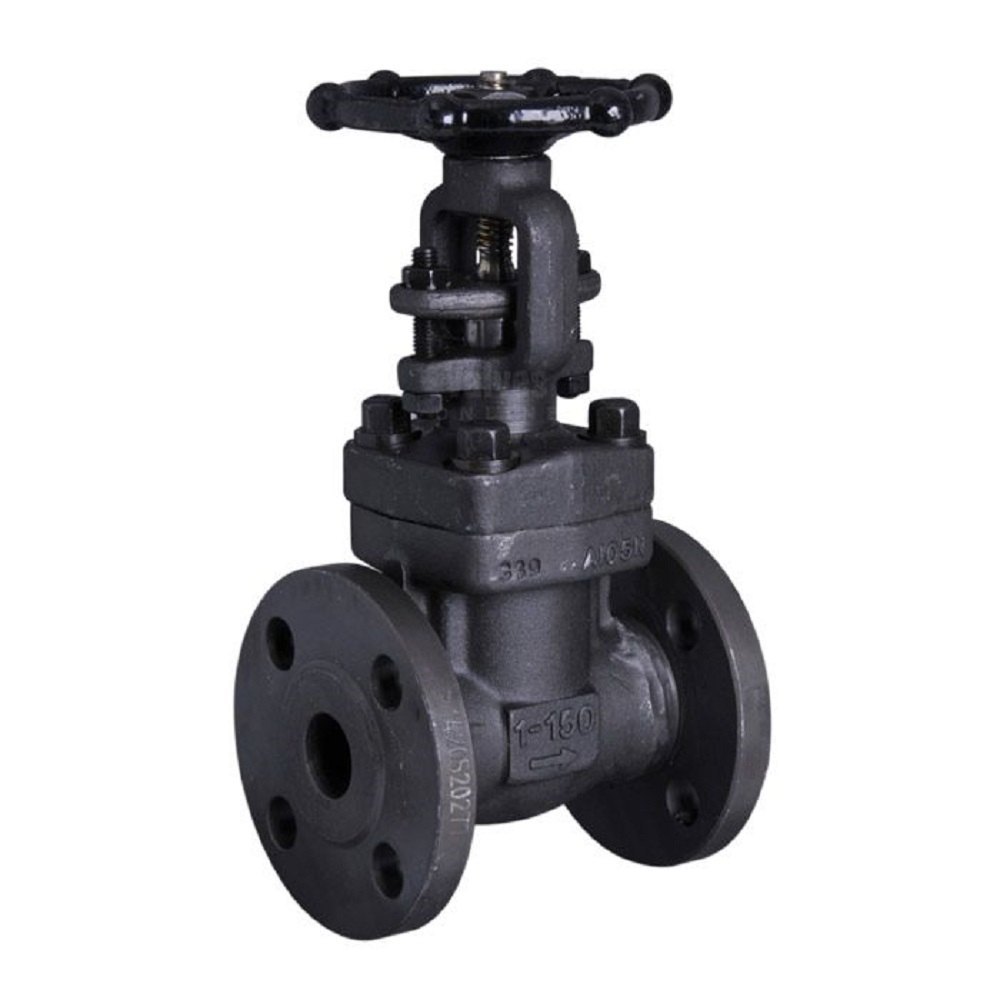
Forged Steel Gate Valves
Forged steel gate valves are robust valves commonly used in high-pressure and high-temperature applications across various industries.
Design and Construction:
• Forged steel gate valves are typically constructed using forged steel materials for the body and bonnet, providing strength and durability in demanding conditions.
• They feature a wedge-shaped gate that moves up and down to control the flow of fluids. The gate is guided by the valve body and seats against the valve seats to provide a tight seal when closed.
• Bonnets are usually bolted or threaded to the body for ease of maintenance and repair.
Materials of Construction:
• Body and bonnet materials: Forged steel gate valves are commonly made from materials such as carbon steel (ASTM A105), alloy steel (ASTM A182 F11, F22), or stainless steel (ASTM A182 F316, F316L) to withstand high-pressure and high-temperature conditions.
• Gate and seat materials: Gate valves may have gates and seats made of materials like stainless steel, carbon steel, or special alloys to provide corrosion resistance and wear resistance.
Standards and Certifications:
• Forged steel gate valves are designed and manufactured in accordance with industry standards such as API 602 (for compact steel gate valves), ASME B16.34 (for valves), and API 598 (for valve inspection and testing).
• They may also comply with various international standards and certifications, depending on the application requirements and the region of use.
Navjivan's Gate Valve
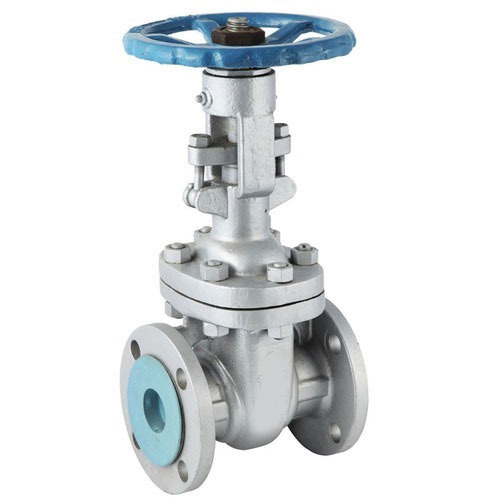
Bolted Gate Valves
Bolted bonnet gate valves are widely used industrial valves designed for reliable shut-off service across a broad range of pressure and temperature conditions. They feature a bonnet that is securely fastened to the valve body using bolts or studs, ensuring a strong, leak-resistant joint. This design allows for easy maintenance and inspection, as the bonnet can be removed when required. Bolted bonnet gate valves are commonly employed in applications involving water, oil, gas, and steam, where robust construction, durability, and dependable sealing performance are essential.
Design and Construction:
• Bolted bonnet gate valves feature a bonnet that is securely attached to the valve body using bolts or studs, forming a strong and pressure-tight joint
• A gasket is placed between the body and bonnet to ensure effective sealing and prevent leakage under varying pressure and temperature conditions.
• The valve stem passes through the bonnet and is sealed using conventional packing (such as graphite or PTFE), which helps control leakage while allowing smooth stem movement.
• This design enables easy disassembly for maintenance, inspection, and replacement of internal components, contributing to longer service life and operational reliability.
Materials of Construction:
• Body and bonnet materials: Bolted bonnet gate valves are commonly manufactured from cast or forged materials such as carbon steel, stainless steel, alloy steel, cast iron, or ductile iron, depending on the pressure, temperature, and service conditions.
• Wedge (disc) and seat materials: The wedge and seating surfaces are typically made from hardened or corrosion-resistant materials such as stainless steel or alloy steel, often with hard-facing (e.g., Stellite) to enhance wear resistance and ensure tight shut-off.
• Stem materials: The valve stem is usually made from stainless steel or other high-strength, corrosion-resistant alloys to provide durability and smooth operation.
• Packing and gasket materials: Packing materials such as graphite or PTFE are used to seal around the stem, while gaskets (spiral wound, graphite, or metal) are used between the body and bonnet to ensure leak-tight performance under varying operating conditions.
Standards and Certifications:
• Bolted bonnet gate valves are designed and manufactured in accordance with widely recognized industry standards such as API 600 (for cast steel gate valves), API 602 (for forged steel gate valves), ASME B16.34 (for pressure-temperature ratings and design), and API 598 (for inspection and testing).
• They may also comply with additional international standards such as BS, DIN, or ISO, as well as project-specific requirements, depending on the application, industry, and regional regulations.
Navjivan's Gate Valve
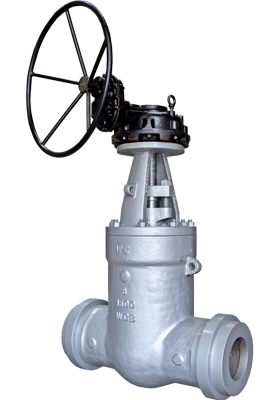
Pressure sealed Gate Valves
Pressure sealed gate valves are specialized valves designed to withstand high-pressure and high-temperature applications commonly found in industries such as power generation, oil and gas, petrochemical, and refining.
Design and Construction:
• Pressure sealed gate valves feature a unique design that relies on internal pressure to enhance the sealing integrity of the valve. The pressure seal bonnet is designed to provide a metal-to-metal seal between the bonnet and the valve body when subjected to internal pressure, eliminating the need for additional gaskets.
• The valve body and bonnet are typically constructed from forged or cast steel materials such as carbon steel, stainless steel, or alloy steel to withstand high-pressure and high-temperature conditions.
• Pressure sealed gate valves are typically designed for bolted bonnet or welded bonnet construction, depending on the application requirements.
Materials of Construction:
• Body and bonnet materials: Pressure sealed gate valves are typically made from forged or cast steel materials such as carbon steel, stainless steel, or alloy steel to withstand high-pressure and high-temperature conditions.
• Gate and seat materials: Gate valves may have gates and seats made of materials like stainless steel, carbon steel, or special alloys to provide corrosion resistance and wear resistance.
Standards and Certifications:
• Pressure sealed gate valves are designed and manufactured in accordance with industry standards such as API 600 or API 602 (for forged steel valves), ASME B16.34 (for valves), and API 598 (for valve inspection and testing).
• They may also comply with various international standards and certifications, depending on the application requirements and the region of use.
Navjivan's Gate Valve
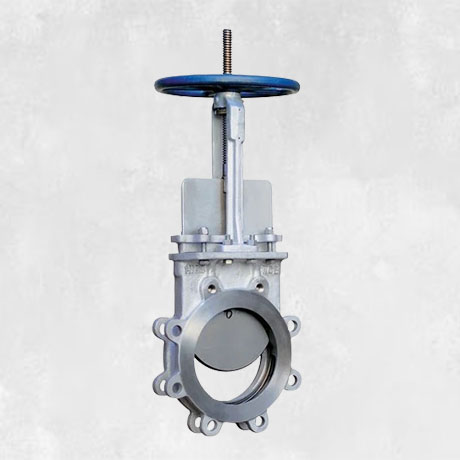
Knife Gate Valves
Knife gate valves are specialized valves designed for applications where isolation of solid-liquid mixtures is required. These valves feature a sharp-edged disc, resembling a knife, which slides across the flow path to cut off the flow.
Design and Construction:
• Knife gate valves consist of a valve body with an inlet and an outlet, and a gate mechanism that moves across the flow path to control the flow of fluids containing solids.
• The gate is typically made of stainless steel or other corrosion-resistant materials and features a sharp-edged design to cut through solid particles in the fluid stream.
• Knife gate valves are available in various designs, including wafer-style (between flanges), lug-style (flanges drilled and tapped), and flanged ends.
Applications:
• Knife gate valves are commonly used in industries such as wastewater treatment, pulp and paper, mining, chemical processing, and food and beverage processing.
• They are particularly well-suited for handling slurries, viscous fluids, and fluids containing solids or fibrous materials.
• Common applications include slurry isolation, tank drain lines, pulp stock lines, bulk handling systems, and effluent treatment plants.
When selecting knife gate valves for a specific application, it’s essential to consider factors such as valve size, materials of construction, actuation method, and sealing requirements to ensure optimal performance and reliability. Additionally, proper installation and maintenance are important to maximize the lifespan of the valve and prevent issues such as leakage or blockages.
Need a Custom Valve Solution ?
We Build Solutions as Unique as Your Operations. Every project has its demands, and at Navjivan Valves, we specialize in delivering tailored flow control solutions that match your exact requirements.
What Our Clients Say
Trusted Worldwide. Proven Performance.
At I.S.ENGINEERING CO., we take pride in building long-term relationships with our clients by consistently delivering quality, reliability, and service. Here’s what our customers have to say:
I.S.ENGINEERING CO. has consistently supplied us with premium-quality flanges and fittings for our industrial projects. Their product quality, timely delivery, and professional support make them a trusted partner.
The pipe fittings supplied by I.S.ENGINEERING CO. are highly durable and precisely manufactured. Their team is knowledgeable and always ready to assist with technical requirements.
We have been sourcing stainless steel flanges and pipes from I.S.ENGINEERING CO. for several years. Their commitment to quality and customer satisfaction is truly commendable.
Excellent service and reliable products. The flanges and industrial fittings we received matched all required specifications and were delivered on schedule.
I.S.ENGINEERING CO. stands out for its premium flange manufacturing and dependable customer support. Their products have helped improve the efficiency of our plant operations.