Check Valves

Navjivan Valve

Check Valves

Check valves, also known as non-return valves or one-way valves, are mechanical devices designed to allow fluid or gas to flow in one direction while preventing reverse flow. They are essential components in piping systems to maintain fluid flow in a desired direction and prevent backflow, which can cause damage to equipment, contamination of processes, or loss of system efficiency.


Check valves play a critical role in ensuring the safe and efficient operation of fluid handling systems by preventing backflow and maintaining flow direction. The selection of the appropriate type and configuration of check valve depends on factors such as the application, operating conditions, flow rate, and fluid characteristics.

There are four main types of Check Valves :

Applications:

Check valves are used in various industries and applications, including water and wastewater treatment, oil and gas, chemical processing, power generation, HVAC (heating, ventilation, and air conditioning), firefighting systems, and many others.

Maintenance:

Check valves generally require minimal maintenance but should be inspected periodically for signs of wear, corrosion, or damage. Routine maintenance may involve cleaning, lubrication, or replacement of worn parts.

Advantages:

• The primary function of check valves is to prevent reverse flow of fluids or gases in pipelines.

• By preventing backflow, check valves help maintain the efficiency of fluid handling systems.

• Check valves protect pumps, compressors, and other equipment from damage that can occur when fluids flow back into them.

• Check valves are available in various types, sizes, and materials to suit a wide range of applications and operating conditions.

• Check valves play a crucial role in ensuring the safety of fluid handling systems, particularly in applications involving hazardous or toxic fluids.

Specifications

Testing Standards:

BS 5146

Size Ranges:

2″-16″ (DN50-DN400)

Class: 150-2500
Material of Construction: WCB, WCC, WC6, WC9, C5, C12, LCB,LCC, CF8, CF8M, etc.
Seat: A105+13%Cr, A105+Steelited.
Trim: API No 1 to 16.
Face to Face: As per ASME B16.10
Actuation: Manual, Gear, etc.
End Connection: ANSI B16.5(Raised Flanged), ANSI B16.25(Butt Weld)

Navjivan's Check Valve

Dual Plate Check Valves

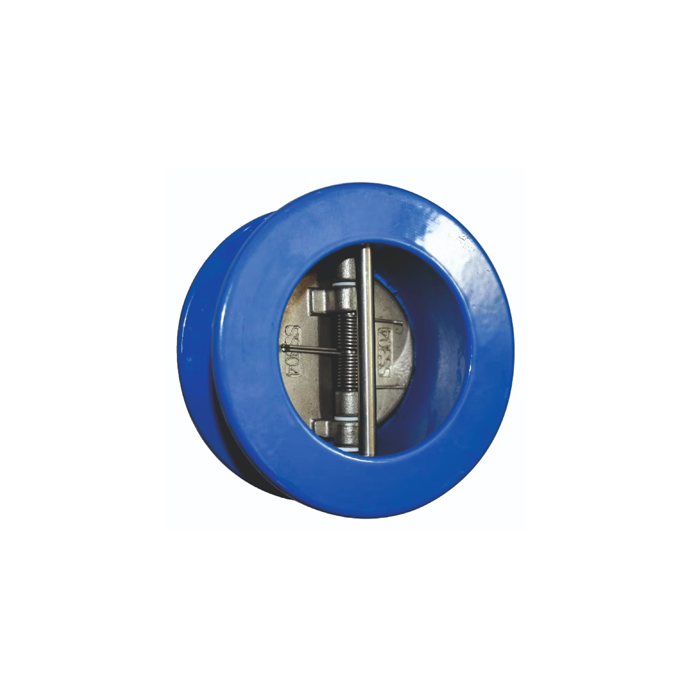
Dual plate check valves, also known as double disc or butterfly check valves, are a type of check valve characterized by their compact design and efficient operation.


Design and Construction:

• Dual plate check valves consist of two semicircular plates or discs that are mounted on a hinge pin within a single body. The plates are designed to open in response to forward flow, allowing fluid to pass through the valve.

• When flow stops or reverses, the plates close under the influence of gravity and flow pressure, preventing backflow.

• The hinge pin allows the plates to swing freely, providing low-pressure drop and efficient operation.


Materials of Construction:

• Dual plate check valves are available in a variety of materials to suit different application requirements, including carbon steel, stainless steel, ductile iron, bronze, and exotic alloys.

• The choice of materials depends on factors such as the fluid being handled, temperature, pressure, and corrosion resistance requirements.


Standards and Certifications:

• Dual plate check valves are manufactured according to industry standards and specifications such as API (American Petroleum Institute), ASME (American Society of Mechanical Engineers), ASTM (American Society for Testing and Materials), ANSI (American National Standards Institute), and others.

• They may also meet specific regulatory requirements or certifications for use in critical applications or hazardous environments.
Navjivan's Check Valve

Forged Steel Check Valves

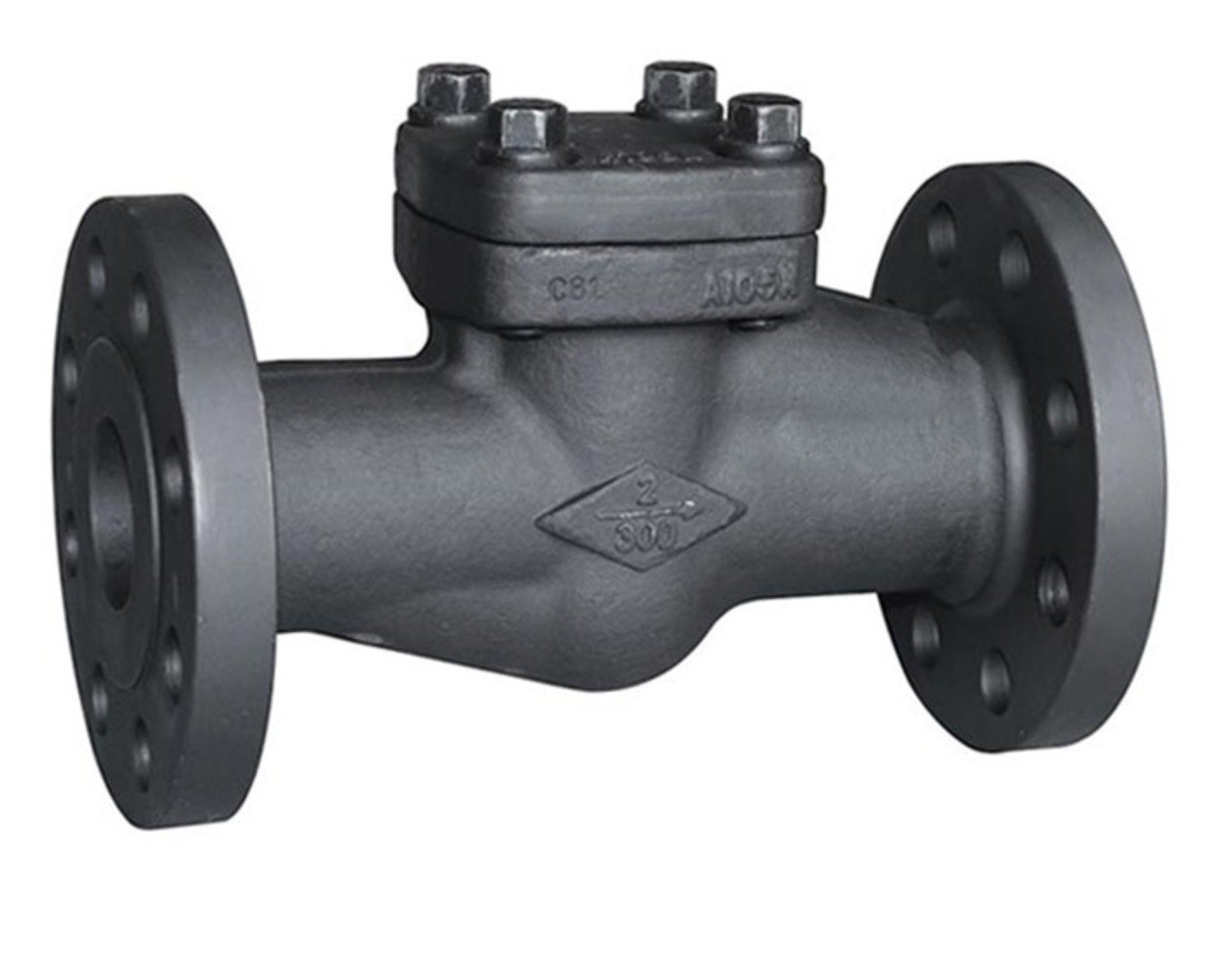
Forged steel check valves are a type of check valve constructed using forged steel components, making them robust and suitable for high-pressure and high-temperature applications.


Design and Construction:

• Forged steel check valves are available in various designs, including swing check valves and lift check valves. Swing check valves feature a hinged disc that swings open in the direction of flow and closes under the influence of gravity or reverse flow.

• Forged steel check valves are constructed using forged steel components for enhanced strength and durability.

• The main components typically include a body, bonnet, disc (or flap), seat, and hinge pin. The valve body and bonnet are forged from steel to withstand high pressures, while the disc is designed to open and close to allow or prevent flow.

• Lift check valves utilize a disc or piston that lifts from the seat to allow flow and settles back to close off flow when pressure decreases or reverses.


Materials of Construction:

• Forged steel check valves are typically made from materials such as carbon steel, stainless steel, or alloy steel.

• The choice of material depends on factors such as the fluid being handled, temperature, pressure, corrosion resistance requirements, and compatibility with other system components.


Standards and Certifications:

• Forged steel check valves are manufactured in accordance with industry standards and specifications such as API (American Petroleum Institute), ASME (American Society of Mechanical Engineers), ASTM (American Society for Testing and Materials), ANSI (American National Standards Institute), and others.

• They may also meet specific regulatory requirements or certifications for use in critical applications or hazardous environments.
Navjivan's Check Valve

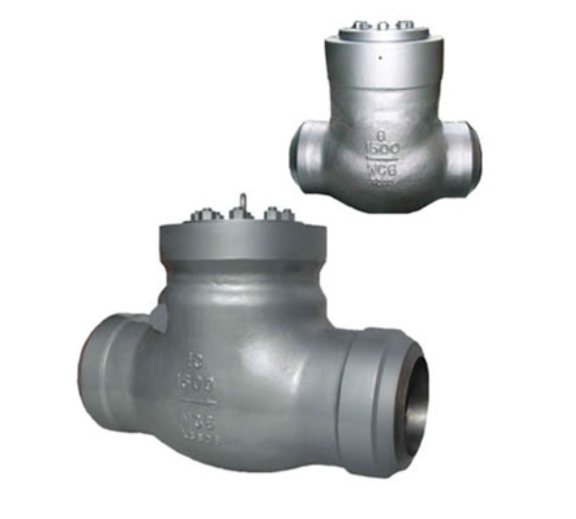
Pressure Sealed Check Valves

Design and Construction:

• Pressure sealed check valves are available in various designs, including swing check valves and lift check valves. Swing check valves feature a hinged disc that swings open in the direction of flow and closes under the influence of gravity or reverse flow.

• Lift check valves utilize a disc or piston that lifts from the seat to allow flow and settles back to close off flow when pressure decreases or reverses.

• Pressure sealed check valves are constructed with robust materials and a unique pressure seal bonnet design to withstand extreme operating conditions. The main components typically include a body, bonnet, disc (or flap), seat, and hinge pin.

• The body and bonnet are designed with pressure seal arrangements, such as threaded, welded, or bolted connections, to ensure a tight seal under high pressure. The disc is engineered to open and close smoothly to allow or prevent flow, while the seat provides a sealing surface for the disc.


Materials of Construction:

• Pressure sealed check valves are typically made from high-quality materials such as carbon steel, stainless steel, alloy steel, or other specialized alloys capable of withstanding high pressures and temperatures.

• The choice of material depends on factors such as the fluid being handled, temperature, pressure, corrosion resistance requirements, and compatibility with other system components.


Standards and Certifications:

• Pressure sealed check valves are manufactured in accordance with industry standards and specifications such as API (American Petroleum Institute), ASME (American Society of Mechanical Engineers), ASTM (American Society for Testing and Materials), ANSI (American National Standards Institute), and others.

• They may also meet specific regulatory requirements or certifications for use in critical applications or hazardous environments.
Navjivan's Check Valve

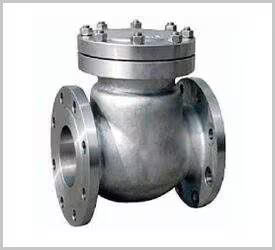
Swing Check Valves

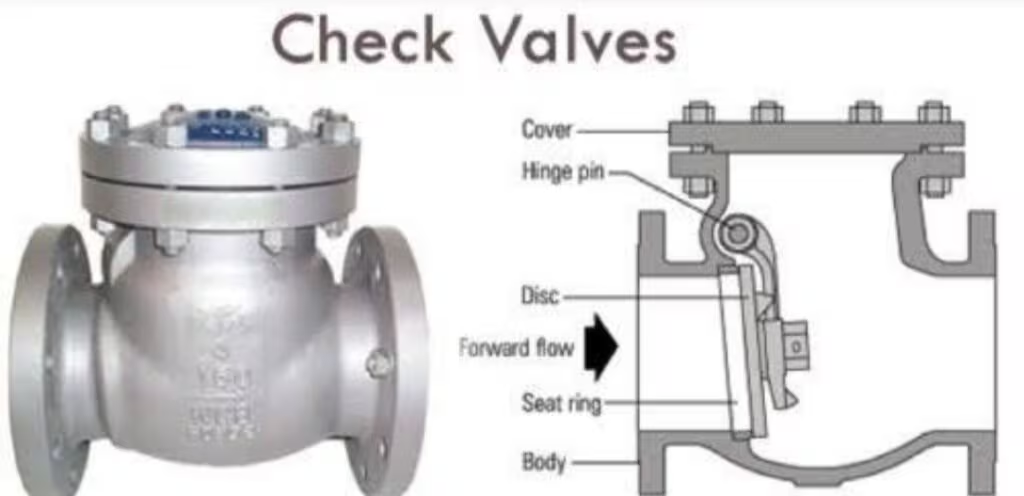
Swing check valves are a type of check valve characterized by a hinged disc or flap that swings open to allow flow in one direction and closes to prevent backflow.


Design and Construction:

• Swing check valves consist of a body with inlet and outlet ports, a hinged disc, and a hinge pin or shaft. The disc is attached to the hinge pin and swings freely within the body to allow or prevent flow.

• When forward flow occurs, the disc swings open, allowing fluid to pass through. When flow stops or reverses, the disc swings closed under the influence of gravity or reverse flow, preventing backflow.


Applications:

• Swing check valves are used in a wide range of industries and applications where backflow prevention is critical.

• They are commonly installed in pipelines, pump discharge lines, steam lines, and process equipment to prevent reverse flow and protect equipment and processes from damage.


Materials of Construction:

• Swing check valves are available in various materials to suit different application requirements, including carbon steel, stainless steel, bronze, cast iron, and exotic alloys.

• The choice of material depends on factors such as the fluid being handled, temperature, pressure, corrosion resistance requirements, and compatibility with other system components.

Navjivan's Check Valve

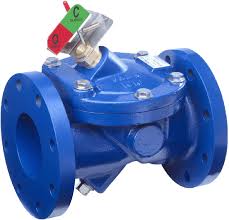
Swing Flex Check Valves

Swing flex check valves, also known as swing-flex or swing-flo check valves, are specialized types of swing check valves designed to provide efficient flow control while minimizing the risk of slamming and water hammer.


Design and Construction:

Swing flex check valves feature a unique flexible disc or flap design that allows for smooth operation and reduced wear compared to traditional swing check valves.

The flexibility of the disc also helps to minimize the effects of water hammer and slamming during operation.

The flexible disc is typically made of elastomeric materials such as rubber or synthetic polymers, providing a tight seal against the valve seat to prevent backflow.


Applications:

Swing flex check valves are commonly used in applications where reliable backflow prevention and efficient flow control are required.

They are suitable for use in pipelines, pump discharge lines, sewage systems, stormwater drainage systems, and other fluid handling applications.


Materials of Construction:

Swing flex check valves are available in a variety of materials to suit different application requirements, including cast iron, ductile iron, carbon steel, stainless steel, and various elastomeric materials for the disc.

The choice of material depends on factors such as the fluid being handled, temperature, pressure, corrosion resistance requirements, and compatibility with other system components.

Our Trusted Brands

Available Brands

At I.S.ENGINEERING CO., we partner with the world’s most reliable and innovative brands to ensure our customers receive only the highest quality products.

Need a Custom Valve Solution ?

We Build Solutions as Unique as Your Operations. Every project has its demands, and at Navjivan Valves, we specialize in delivering tailored flow control solutions that match your exact requirements. 

What Our Clients Say

Trusted Worldwide. Proven Performance.

At I.S.ENGINEERING CO., we take pride in building long-term relationships with our clients by consistently delivering quality, reliability, and service. Here’s what our customers have to say:

I.S.ENGINEERING CO. has consistently supplied us with premium-quality flanges and fittings for our industrial projects. Their product quality, timely delivery, and professional support make them a trusted partner.

Rahul Mehta Project Engineer

The pipe fittings supplied by I.S.ENGINEERING CO. are highly durable and precisely manufactured. Their team is knowledgeable and always ready to assist with technical requirements.

Amit Sharma Procurement Manager

We have been sourcing stainless steel flanges and pipes from I.S.ENGINEERING CO. for several years. Their commitment to quality and customer satisfaction is truly commendable.

Vikram Joshi Operations Head

Excellent service and reliable products. The flanges and industrial fittings we received matched all required specifications and were delivered on schedule.

Nilesh Patil Quality Supervisor

I.S.ENGINEERING CO. stands out for its premium flange manufacturing and dependable customer support. Their products have helped improve the efficiency of our plant operations.

Karan Desai Plant Engineer